Resources
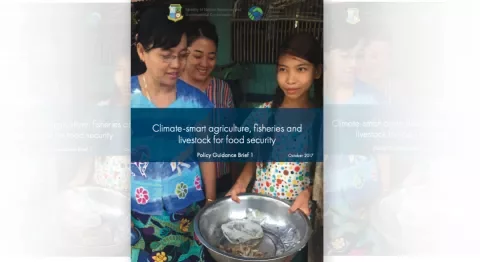
Policy Guidance Brief 1: Climate-smart Agriculture, Fisheries and Livestock for Food Security, 2017 (Myanmar)
The Guidance Brief is a tool to effectively address climate change in Myanmar by aiding the understanding of key sectoral challenges, strategic objectives and specific actions. Climate change has already challenged the agriculture sector in Myanmar by affecting rice yields and livestock production. There is an urgent need of further action to promote sustainable agriculture by adapting crop varieties and corresponding farming practices, improving water management especially in rice production, reducing greenhouse gas emissions from rice and livestock farming, promoting integrated farming systems and enhancing the capacity of farmers to respond to climate risks.
Policy Guidance Brief 2: Sustainable Management of Natural Resources for Healthy Ecosystems
The Guidance Brief is a tool to effectively address climate change in Myanmar by aiding the understanding of key sectoral challenges, strategic objectives and specific actions. The protection and rehabilitation of natural resources of Myanmar are the keys to minimize climate risk.
Policy Guidance Brief 3: Resilient and Low-Carbon Energy, Transport and Industrial Systems for Sustainable Growth, 2017 (Myanmar)
The Guidance Brief is a tool to effectively address climate change in Myanmar by aiding the understanding of key sectoral challenges, strategic objectives and specific actions. Limited access to electricity in the country translates to a greater risk to energy connectivity across the country in the face of climate change.
Environmental Impact Assessment in the Mekong Region
The Environmental Impact Assessment (EIA) in the Mekong Region manual is the first time that anyone has sought to bring together in one volume an analysis of the EIA systems of each of the six Mekong countries, including the common themes and approaches.
Environmental Risk Regulation and the Indian Supreme Court: an Exercise in De-formalization of the Law?
The Supreme Court specifically has framed the issue of environmental protection as a public good – and therefore in terms of rights and entitlements t clean air, healthy environmental, pollution free water, etc. However entitlements to these public goods cannot be absolute – since in certain circumstances they may have to be balanced with other public goods – like opportunities for employment generation and other related economic development goals.
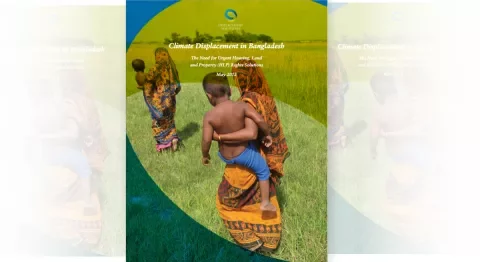
Climate Displacement in Bangladesh, 2012
The report looks into present and future causes of climate displacement in Bangladesh. It examines existing and proposed solutions to climate displacement and relief to climate displaced persons and emphasizes that rights-based solutions, e.g., housing, land and property rights solutions must be utilized in solving this crisis.
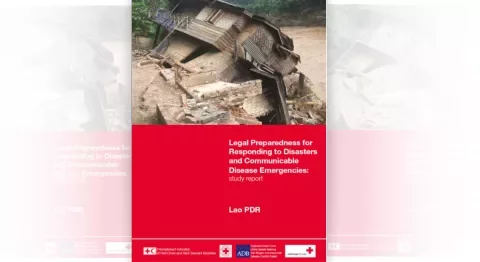
Legal Preparedness for Responding to Disasters and Communicable Disease Emergencies: Study Report - Lao PDR
Laos is prone to a number of different disaster and disease risks such as floods in the Mekong corridor, major droughts, earthquakes, flash floods and storms related to a heavy typhoon season, as well as human influenza pandemic. Having a comprehensive legal framework in place will facilitate fast mobilization and response in the event of an emergency and will contribute to good coordination and information exchange between different humanitarian partners regardless of whether they are local, national or international.
Turning Promises into Action: ‘Legal Readiness for Climate Finance’ and Implementing the Paris Agreement
A clear imperative in addressing the climate crisis is to turn finance promises into climate action. This article explores this challenge through the lens of the emerging concept of ‘legal readiness for climate finance’. It is defined as the degree to which a country has coherent regulatory architecture in place, together with requisite domestic technical expertise and institutional capacity, to systematically attract and mobilise finance at scale to address climate change and its impacts.
Climate Finance Law: Legal Readiness for Climate Finance
This report summarizes the findings of the workshop Climate Finance Law: Legal Readiness for Climate Finance co-convened by King’s College London and UN Environment.
Legal Readiness for Climate Finance: Private Sector Opportunities - Report and Findings of Roundtable held at King’s College London
This report summarises the agenda and findings of the Legal Readiness for Climate Finance: Private Sector Opportunities round-table co-convened by King’s College London, UN Environment, and Legal Response International.