
About the MoFAI
The Model Forest Act Initiative (MoFAI) is a groundbreaking global partnership that is currently developing a modern, coherent, and adaptable legislative blueprint to assist national and subnational jurisdictions in designing new forest laws, consolidating fragmented legal frameworks, and modernizing existing legislation. Drawing on legislative practice, legal and scientific expertise, international experience, and lessons from implementation, MoFAI aims to provide an integrated framework and a menu of legislative options that can be tailored to different legal systems, institutions, ecosystems, and policy priorities. The Model Framework Forest Act and Legislative Guide are knowledge resources (not internationally negotiated text) to provide ideas for improving legislative drafting and the implementation of good forest practices.
MoFAI Objectives
- Address contemporary challenges, including deforestation, biodiversity loss, and climate change;
- Close ethical and legal gaps in outdated forest laws;
- Promote integrated and coherent forest legal frameworks;
- Align national and subnational laws with international commitments and modern environmental law principles;
- Strengthen implementation through scientifically sound and technically robust legal provisions;
- Enhance governance by recognizing diverse actors, rights, responsibilities, and the interconnected nature of forest-related laws; and
- Foster coherence and mutual learning across major forest biomes and regions.
The Development Process
Knowledge and Evidence
Governance and Drafting
Participation
Legislative Analysis and Best Practices Research
Analyzing international instruments and regional agreements, principal forest laws and related environmental frameworks, and policy and governance approaches from across the globe to identify innovative and illustrative practices.
Multi-Stakeholder Collaboration
Conducting regular, multidisciplinary consultations with policymakers, legislators, judges, lawyers, international and non-governmental organizations, civil society groups, local forest communities, Indigenous Peoples, technical experts, social and natural scientists, the private sector, and development partners.
Expert Drafting Committee
Carefully selected experts drawn from across the globe, representing legal and scientific disciplines, a diverse range of institutions and regions, and stemming from a variety of backgrounds.
Model Forest Act Initiative (MoFAI)
Development Process
Evidence-Informed Approach
Using scientific data, the best available knowledge, and cutting-edge evidence and expertise, and insights and experiences arising from a diversity of geographies, biomes, and sources to inform effective model provisions.
Advisory Council
Renowned specialists to offer technical advice on legal, ethical, social, scientific, policy, and governance aspects, drawing on perspectives from various jurisdictions and experiences and reflecting the best available knowledge.
Executive Board
Leader-level stakeholders from partner organizations involved in MoFAI, who provide overarching strategic direction, ensure alignment with global priorities and dialogues, and support capacity building.
Partnerships and Capacity Building
Building partnerships, awareness, knowledge and capacity across countries, governments, and key stakeholders in ecologically sustainable forest management and protection.
Knowledge and Evidence
Legislative Analysis and Best Practices Research
Analyzing international instruments and regional agreements, principal forest laws and related environmental frameworks, and policy and governance approaches from across the globe to identify innovative and illustrative practices.
Evidence-Informed Approach
Using scientific data, the best available knowledge, and cutting-edge evidence and expertise, and insights and experiences arising from a diversity of geographies, biomes, and sources to inform effective model provisions.
Participation
Multi-Stakeholder Collaboration
Conducting regular, multidisciplinary consultations with policymakers, legislators, judges, lawyers, international and non-governmental organizations, civil society groups, local forest communities, Indigenous Peoples, technical experts, social and natural scientists, the private sector, and development partners.
Partnerships and Capacity Building
Building partnerships, awareness, knowledge and capacity across countries, governments, and key stakeholders in ecologically sustainable forest management and protection.
Model Forest Act Initiative (MoFAI)
Development Process
Governance and Drafting
Expert Drafting Committee
Carefully selected experts drawn from across the globe, representing legal and scientific disciplines, a diverse range of institutions and regions, and stemming from a variety of backgrounds.
Advisory Council
Renowned specialists to offer technical advice on legal, ethical, social, scientific, policy, and governance aspects, drawing on perspectives from various jurisdictions and experiences and reflecting the best available knowledge.
Executive Board
Leader-level stakeholders from partner organizations involved in MoFAI, who provide overarching strategic direction, ensure alignment with global priorities and dialogues, and support capacity building.
MoFAI Outcomes
MoFAI will publish the Model Framework Forest Act and accompanying Legislative Guide as practical knowledge resources for policymakers, legislators, advisers, regulators, forest managers, judges, and capacity-building practitioners involved in forest law reform, implementation, and enforcement.

Legal Foundations: Model Framework Forest Act (2027)
Designed as a framework law that establishes a broad structure for forest governance which should be supplemented at a later stage by specific parts for individual legal instruments or topics. It offers a carefully developed text and structure from which jurisdictions may draw when designing or enhancing national or subnational forest legislation. It is based on a modular structure, with a “shopping cart” approach enabling users to select and adapt provisions for their national or subnational circumstances.
User Manual: Legislative Guide to the Model Framework Forest Act (2027)
An accompanying Legislative Guide explains the rationale underlying the Model Framework Forest Act’s provisions, supports their interpretation and implementation, and assists jurisdictions in adapting the Act to national and subnational priorities and circumstances. This includes drafting considerations and checklists, real-world cases and illustrative practices, a spectrum of approaches to implementation and links to knowledge resources.
Building Blocks of the Model Framework Forest Act
Model Framework Forest Act
Conceptual Foundations
Purpose, scope, key concepts and guiding parameters for the Act

Preamble

Scope and
Objectives

Definitions
Normative Framework
Rights, responsibilities, commitments and obligations of states, forest actors, and other relevant stakeholders

Principles of Forest
Law and Governance

General Forest Rights
and Duties
Governance and Tools
Governance arrangements, institutional mandates, and the instruments and mechanisms for implementation

Institutions for Forest
Governance

Instruments of Forest Law
and Governance
Thematic Areas
Key environmental, economic, and climate-related dimensions of forest management

Forests and
Climate
Change

Forest
Finance

Forest-Based
Circular
Bioeconomy

Planted
Forests
Safety, Equity, and Enforcement
Protecting forests and people through risk management, enforcement, and accountability

Regulation and
Management
of Fire

Enforcement

Access
to Justice and
Dispute Resolution
Final Provisions
Consistency in interpretation and enables practical implementation through regulations

Rules of Interpretation

Regulations
Dissemination and Capacity Building
The Model Framework Forest Act and accompanying Legislative Guide will be widely disseminated through the websites and knowledge platforms of MoFAI partners to support their uptake and use, in consultation and collaboration with organizations and legislators throughout the world. Together, these resources will strengthen the capacity of policymakers, legislators, drafters, regulators, forest administrations, enforcement authorities, judges, and other stakeholders involved in the development, implementation, and enforcement of forest laws. They will also inform policy dialogue, help identify legislative and institutional reform opportunities, and strengthen legal frameworks for sustainable forest governance.
MoFAI In Action
Knowledge Resources
View all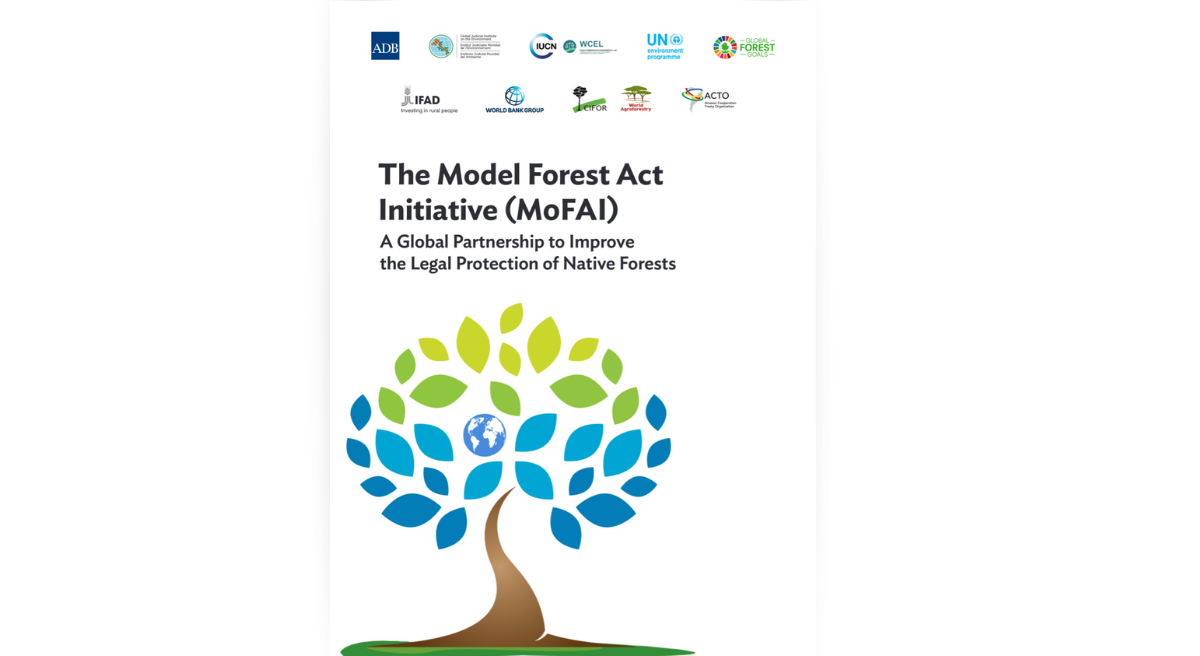
The Model Forest Act Initiative (MoFAI): A Global Partnership to Improve the Legal Protection of Forests
The MoFAI is a groundbreaking initiative to provide a comprehensive and innovative legal blueprint for legislators, policymakers, and other stakeholders in designing a modern legal framework for the protection, conservation, restoration, and ecologically sustainable management and use of forests.
Read More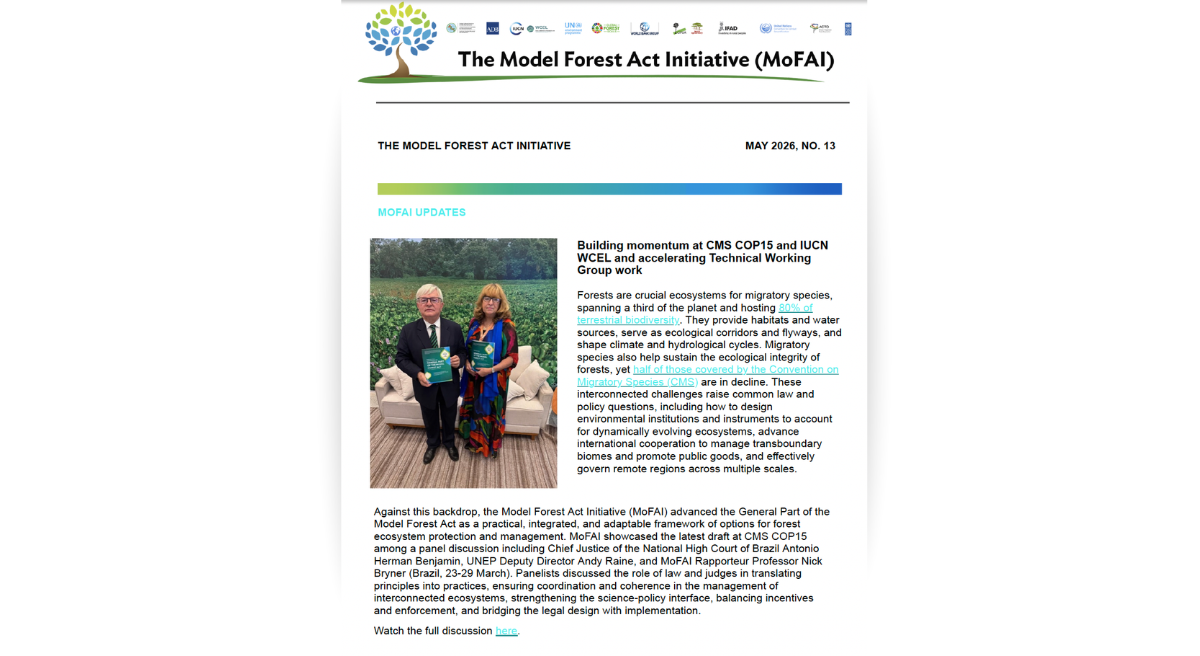
The MoFAI (Model Forest Act Initiative) Newsletter Q2, 2026 NO. 16
The MoFAI (Model Forest Act Initiative) Newsletters provide curated updates on forest law developments, legislative reforms, and policy trends across Asia and the Pacific and beyond, including the Congo and Amazon regions. Developed in collaboration with the ADB Library, the newsletters track legal, regulatory, and governance developments affecting forests, land use, biodiversity conservation, and related environmental sectors.
Read More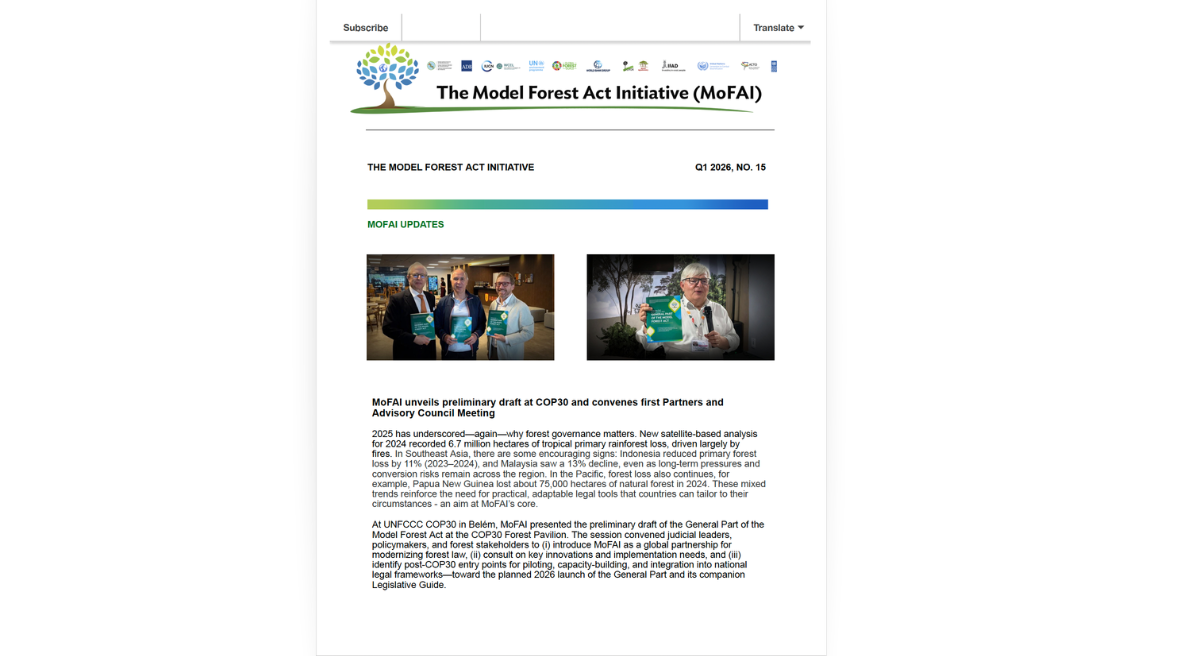
The MoFAI (Model Forest Act Initiative) Newsletter Q1, 2026 NO. 15
The MoFAI (Model Forest Act Initiative) Newsletters provide curated updates on forest law developments, legislative reforms, and policy trends across Asia and the Pacific and beyond, including the Congo and Amazon regions. Developed in collaboration with the ADB Library, the newsletters track legal, regulatory, and governance developments affecting forests, land use, biodiversity conservation, and related environmental sectors.
Read More