Resources
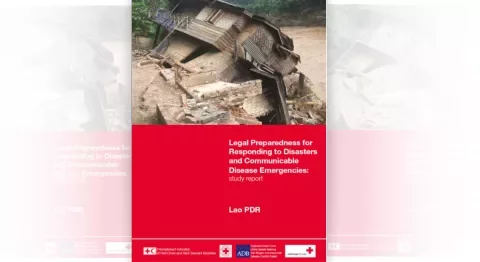
Legal Preparedness for Responding to Disasters and Communicable Disease Emergencies: Study Report - Lao PDR
Laos is prone to a number of different disaster and disease risks such as floods in the Mekong corridor, major droughts, earthquakes, flash floods and storms related to a heavy typhoon season, as well as human influenza pandemic. Having a comprehensive legal framework in place will facilitate fast mobilization and response in the event of an emergency and will contribute to good coordination and information exchange between different humanitarian partners regardless of whether they are local, national or international.
Criminal Procedure Code of Kingdom of Cambodia
This Code of Criminal Procedure aims at defining the rules to be strictly followed and applied in order to clearly determine the existence of any criminal offense. The provisions of this Code shall apply for criminal cases unless there are special rules set forth by separate laws.

Processes of Request for Export or Import of Timber and Non-Timber Forest Products
There are 5 phases for the processes of request for export or import of timber and non-timber forest products. The required timing for getting permission may vary according to nature of requests and the completeness of submitted application form and supported documents.
Sub-Decree on Control of Air Pollution
The purpose of this sub-decree is to protect the quality of the environment quality and public health from air pollutants and noise disturbance through monitoring, curbing and mitigating activities.
Kyoto Protocol to the United Nations Framework Convention on Climate Change
The Kyoto Protocol is an international agreement linked to the United Nations Framework Convention on Climate Change, which commits its Parties by setting internationally binding emission reduction targets.

Environment & Development: Making Sense of Predicament of the Developing Countries
Our only abode – the Earth — is understood to be facing a serious crisis of survival. In the process of evolution, the human race has reached a stage when,armed with the prowess of science and technology, it has considerably transformed our living environment.The mindless ‘developmental’ spree across the globe is now seriously threatening our fragile essential ecological processes. It seems the humankind is facing one of the biggest tests for striking a judicious balance between developmental needs and environmental imperatives.
Implementation of the Convention on Biological Diversity A retrospective analysis in the Hindu Kush-Himalayan countries
This paper looks at the progress made in the implementation of the CBD and 2010 targets in the eight countries of the Hindu Kush-Himalayan region: Afghanistan, Bangladesh, Bhutan, China, India, Nepal, Myanmar and Pakistan. The paper was commissioned by ICIMOD, an inter-governmental institution mandated for the region, as one of its activities in support of the CBD and the International Year of Biodiversity 2010. Using the national reports to the CBD as the primary source, the paper examines the progress made by the countries in implementing the Convention.
Forests, International Protection
The issue of forests is related to the entire range of environmental and development issues, including the right to socio-economic development on a sustainable basis.All types of forests embody complex and unique ecological processes which are the basis for their present and potential capacity to provide resources to satisfy human needs as well as environmental values, and as such their sound management and conservation is of international concern for the protection and preservation of environment.2Forests play an important role in meeting energy requirement
Threats to the World Eco-system: A Role for the Social Scientists
This paper seeks to identify some of the major threats to our fragile eco-system through human actions. We have sought to highlight that since these threats to our composite ecological heritage are global in nature, our responses shall have to be at the global level. We have tried to analyse a role the social scientists can exercise in response to these threats. We have merely shown possible responses within their professional disciplines. Can they play an activist’s role?
Making Sense of Post-2012 Climate Change Regulatory Process: Some Reflections
Professor Bharat Desai's presentation - Making Sense of Post-2012 Climate Change Regulatory Process: Some Reflections